
Partner Name: Smart Aid and Development Organization (SAAD)
Reporting Period: January–March 2026
Contract Number: +252-90-7635995
Email: ahmed.isse@saadsom.org
1. Key Programmatic Achievements and Progress
Building on the advanced training of 10 university student activists completed in December 2025, SAAD, in partnership with the Ministry of Women Development and Family Affairs (MOWDAFA) and the Qardho Local Government and with support from GIZ, successfully launched the implementation phase of the Community Action Plan (CAP) to end Female Genital Mutilation (FGM) and Gender-Based Violence (GBV) in Qardho. This quarter focused on direct community engagement through structured dialogues with parents and youth.
Key achievements during this period include:
Activity 1: CAP Planning & Coordination Workshop (January 7–8, 2026)
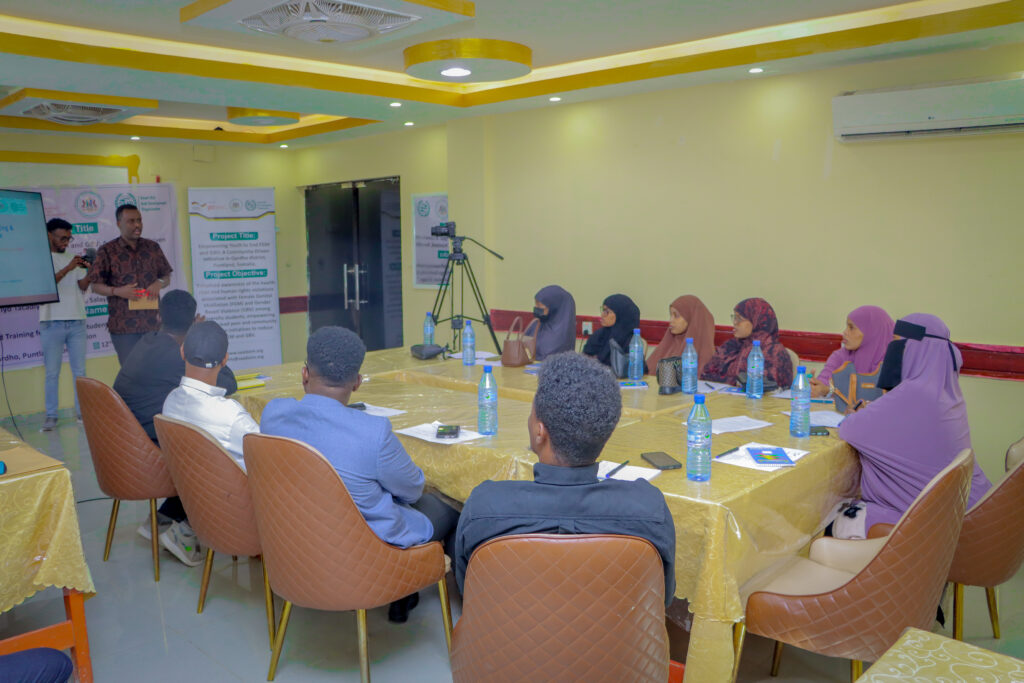
A two-day workshop aligned stakeholders—SAAD project team, MOWDAFA Karkaar region office, and 10 youth activists—on roles, session materials, and logistics. Activists were assigned as lead facilitators for gender-separate dialogue sessions and co-facilitators for joint community dialogues. Only female facilitators were assigned for female-only dialogue sessions and male facilitators for sessions designed for male-only participants.
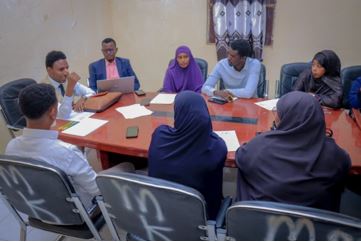
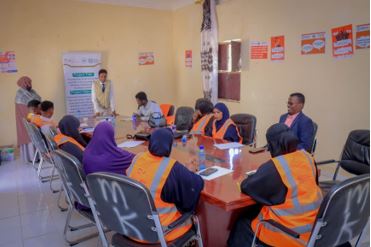
- Facilitation and training materials were translated into Somali, and participant-centered techniques using discussions on harmful traditional practices in a global-to-local comparative approach—where FGM is compared to lip plating and foot binding—were approved.
- Facilitator readiness was confirmed through:
- Presentation rehearsals
- Role-play exercises
- Peer feedback sessions
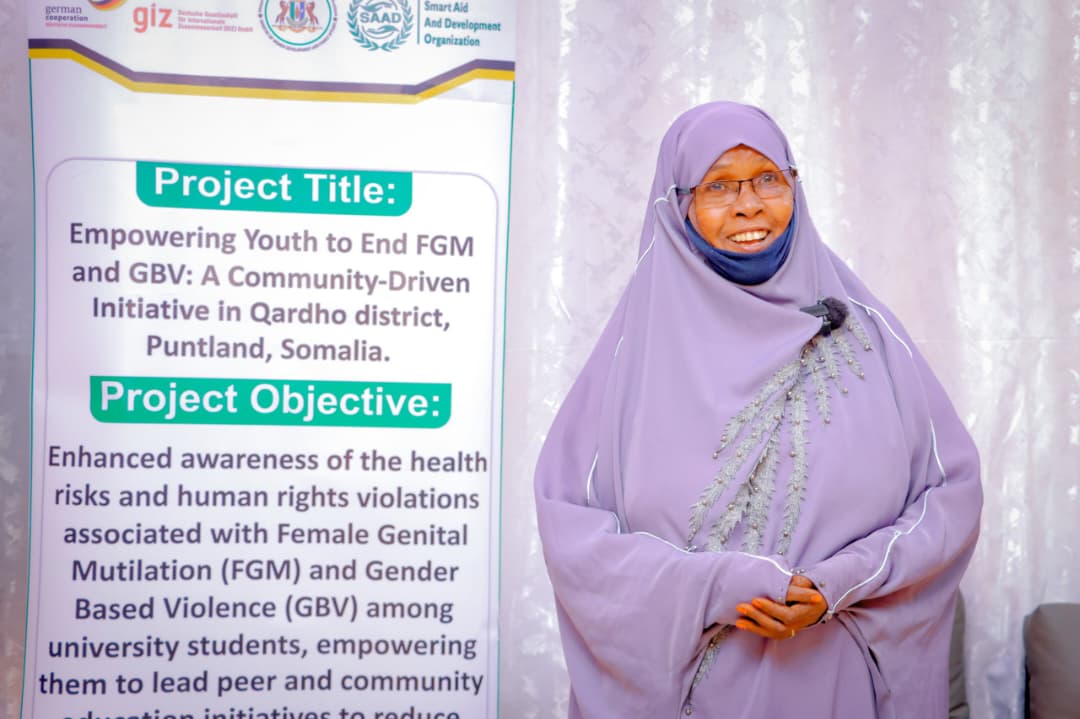
“The Ministry of Women is committed to supporting you; you [activists] are the wings and we are the body. Together, we will eradicate this harmful practice from our city.”
— Ms. Sahra Jaqanaf, MOWDAFA Karkar
Following the workshop, the SAAD team and youth activists, with the support of MOWDAFA, engaged with the district mayor and other officials in the Qardho local government, as well as IDP camp and village leaders, to discuss CAP implementation. Participants in CAP activities were identified from IDP camps and diverse neighborhoods in the host community with the assistance of local government, MOWDAFA, and youth activists.
Activity 2: Community Action Plan – Parent Dialogue Sessions
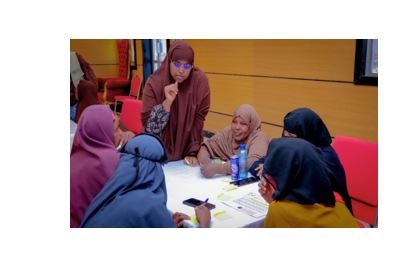
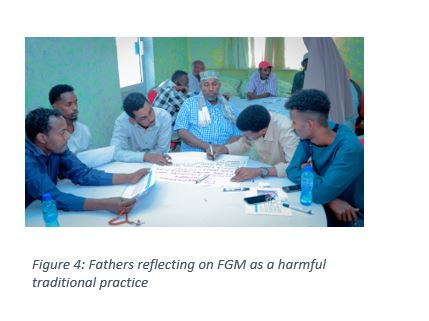
For these sessions, parents were specifically selected because they had at least one uncut daughter (or granddaughter). This criterion ensured that the dialogues directly addressed families still at risk of perpetuating FGM. A total of 30 parents (15 mothers, 15 fathers) from diverse neighborhoods (12 from IDP camps, 18 from host communities) participated. Two Traditional Birth Attendants (TBAs), two professional midwives, and one former cutter were also included among the mothers.
Activity 2: Gender-Separate Sessions (January 14, 2026)
Key Results in Gender-Separate Parent Dialogue Sessions:
| Mothers Session (15 participants) |
| Created safe space for sharing personal FGM experiences |
| Deep engagement with health complications: childbirth, pain, infections, fistula |
| Emotional breakthrough: one mother shared lifelong suffering, catalyzing collective reflection |
| Mothers committed to protecting daughters and breaking silence |
| Health workers among mothers shared clinical experiences, reinforcing medical evidence |
| Fathers Session (15 participants) |
| Focused on religious evidence and family honor |
| Discussed economic burden of FGM-related health issues |
| Fathers acknowledged exclusion from FGM decisions despite bearing financial consequences |
| Shift from passive acceptance to recognizing role as protectors |
| Agreement that FGM lacks authentic Islamic foundation |
Specific Health Risks Recognized during the Session
All parents (100%) recognized at least one childbirth complication associated with FGM.
Exactly 73% of mothers (11/15) and 60% of fathers (9/15) acknowledged that FGM causes pain, bleeding, menstrual problems, and infections.
Parent Voices – Gender-Separate Sessions
“The cutting of our girls is painful and wrong. I have lived with that pain. It is not a good tradition—it must end.”
— Mother participant
“The Pharaonic circumcision is more harmful than other traditions. It can cause bleeding, menstrual problems, infections in the reproductive organ, fistula that troubles the girl, and harm reaching the child and the girl’s life.”
— Father participant
“Mothers make the final decision about cutting; men are not consulted, we are only asked to pay the money for traditional cutters and bear the financial burden of the health consequences after that.”
— Father participant
Action Plan for Parents
During the dialogue sessions, the SAAD team and parents agreed on the following actions:
1. Follow‑up Home Visits
The SAAD team and youth activists will conduct home visits (from May to August 2026) to participating families. These visits aim to reinforce commitments, strengthen parents’ determination, and document success stories from parents who have demonstrated willingness to abandon FGM.
2. Resistance Response Training
Parents will participate alongside youth in training on resistance handling techniques. Parents who have shown willingness to abandon FGM will learn how to listen carefully to those who still have concerns. They will learn to acknowledge those fears, reframe criticism and concerns into shared values or common ground, and ask deeper questions to understand others’ perspectives while showing empathy. These parents will then be equipped to educate their peers on FGM health risks and encourage them to stop the practice.
3. Public Pledge Event
This cumulative event is for all participants, including parents. Parents who did not cut their daughters will take part in the event. They will be publicly recognized, invited to speak about their decision, and join the collective signing of a public pledge for an FGM‑free Qardho.
Activity 3: Parent Joint Session (January 15, 2026)
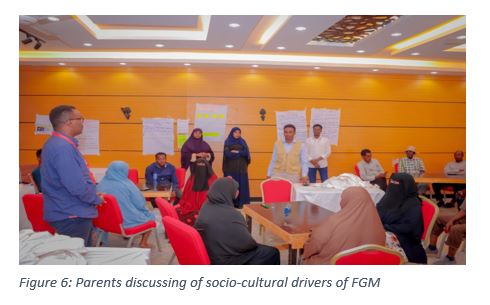
All 30 parents (15 mothers and 15 fathers) convened for a joint dialogue session. Key discussion points mainly focused on:
- The distinct but complementary roles of parents in protecting children, and
- Socio‑cultural drivers of FGM such as marriageability, preservation of chastity, and peer pressure.
Specific Outcomes of the Joint Session
- 63% of parents (19/30) expressed a clear commitment to protect their daughters from all types of FGM including the Sunna one, and they will participate educating their peers. Mothers shared their negative experiences while acknowledging the continuity of the practice despite the known harms due peer pressure.
- 100% of parents (30/30) denounced Type III (Pharaonic) FGM as harmful and unacceptable.
- 93% of parents (28/30) recognized that Sunna‑type FGM is also harmful; only 7% (2 parents – 1 father, 1 mother) remained hesitant.
- 27% (8/30) showed some hesitation: 7% (2/30) cited religious justification for Sunna FGM, and 20% (6/30) raised marriageability concerns.
- Fathers shifted from being passive observers to taking a more active role in child protection.
Parent Voices – Joint Session
“I agree that it should be stopped since it is not religious and has health problems.”
— Father participant
“We should abandon circumcision for our daughters. If we cannot protect our daughters, why did we give birth to them?”
— Mother participant
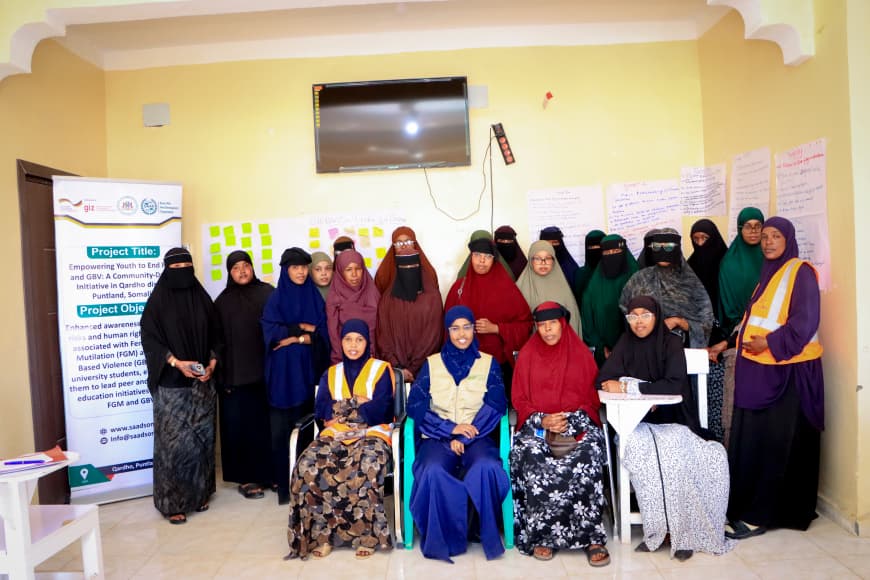
Activity 4: Activity Female Youth Dialogue (February 17, 2026):
- Twenty-five female youth (10 from IDP and 15 from host communities) participated in a dialogue session on FGM prevention. The session covered harmful traditional practices globally, types of FGM, associated health risks and human rights violations, religious myths linking FGM to Islam, Puntland’s zero-tolerance and anti-medicalization policies, story sharing, empowering female youth as peer advocates, and FGM referral pathways. The session concluded with individual commitments to prevent FGM among younger sisters, relatives, and future daughters.
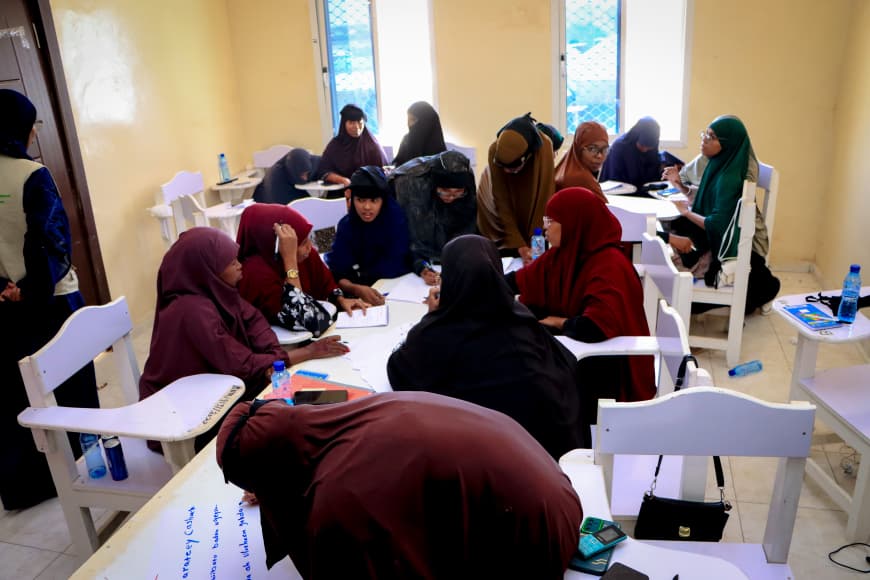
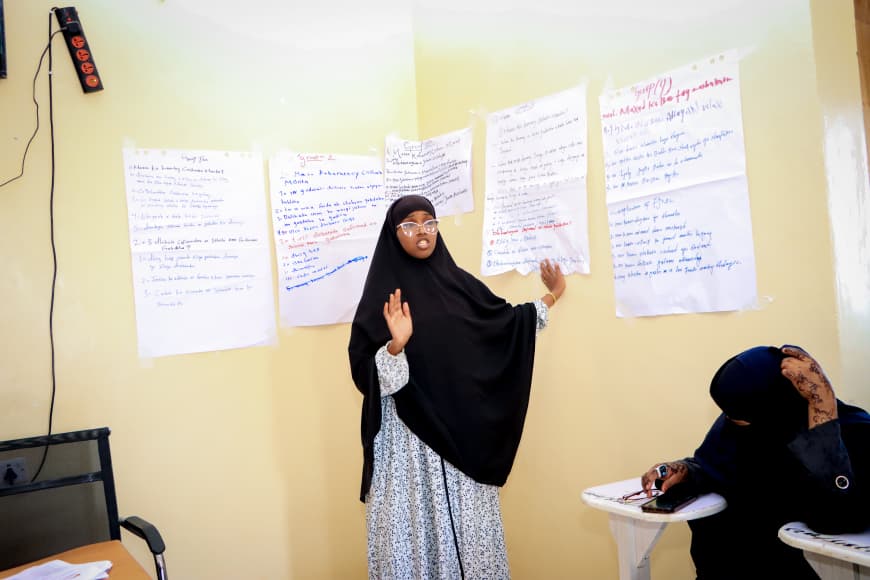
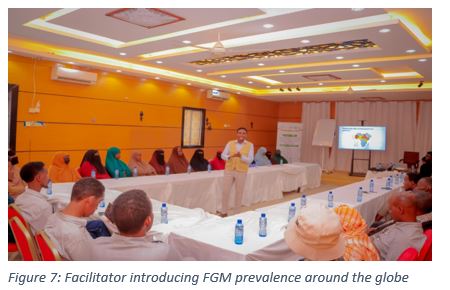
- Following the standard opening of SAAD activities, the facilitator introduced harmful traditional practices from around the world that violate women’s human rights. Examples included foot binding in China and lip plating in Ethiopia, along with the justifications historically used by the communities that practiced them. Participants were then asked to reflect on these practices. All participants condemned them, describing them as “cruel,” “torture,” “violence against young girls,” “immoral/illegal,” and “ignorance.”
- The facilitator then introduced FGM, its types, health risks, and the invalidity of common justifications for the practice. Participants were asked to reflect on FGM, starting with the most severe form (Pharaonic), and to compare each type with global traditional practices (e.g., comparing Sunna type to a small lip plate). Participants drew parallels between these harmful practices and how they are justified using culture and identity. Observations noted that most female youth participants mentioned menstrual issues in their reflections. Selected reflections include:
“FGM is as dangerous as the practices we saw. It causes menstrual problems for girls, constant back pain, severe bleeding—some girls even die from this—and infections.”
— Female youth participant
“FGM gets worse during adolescence. When a girl starts menstruating, she begins to live in fear. I hate it, and I know every girl hates it.”
— Female youth participant
“Many women in our city die during childbirth. I believe it has something to do with the fact that they are all mutilated.”
— Female youth participant
“I think FGM is more dangerous than lip plating. FGM causes irreversible damage that is passed from mother to child.”
— Female youth participant
A trained activist then shared her personal story to create a safe environment for sharing. Participants were subsequently invited to share their experiences in small groups. One participant’s story included the following:
“I was cut when I was eight—my younger sister, two of our neighbors, and I were gathered at my grandmother’s house. It was a holiday, and there was no school. We were put in a room, and one by one, we were taken to another room where the traditional cutter and two other women were waiting. I was the first. They told me it would be easier if I didn’t resist. I felt like my heart was going to jump out of my chest. I tried to say please, no—I begged, but no one listened. They held my hands and legs tightly and cut me. It was the most painful moment of my life. But it didn’t end there. FGM gets worse during adolescence. When a girl starts menstruating, she starts living in fear. I hate it, and I know every girl hates it. I would never have accepted it if I had been strong enough.”
Facilitators then addressed religious myths linking FGM to Islam. They explained that FGM is not mentioned in the Quran, that the hadiths often cited to justify it are weak, and that a growing number of Islamic scholars are calling for its abandonment. Participants discussed FGM through a global lens, raising critical questions: If FGM is an Islamic requirement, why is it not practiced in Saudi Arabia, where Islam began, while Somalia has a 98% prevalence rate? Why does Indonesia, home to over 250 million Muslims, not practice FGM while Somalis do? If it is Islamic, why do Ethiopian and Eritrean Christians also practice it? Facilitators further clarified that while “Sunnah” means recommended, not required, even in that interpretation, FGM lacks authentic supporting evidence; FGM is a harmful custom, not a religious obligation.
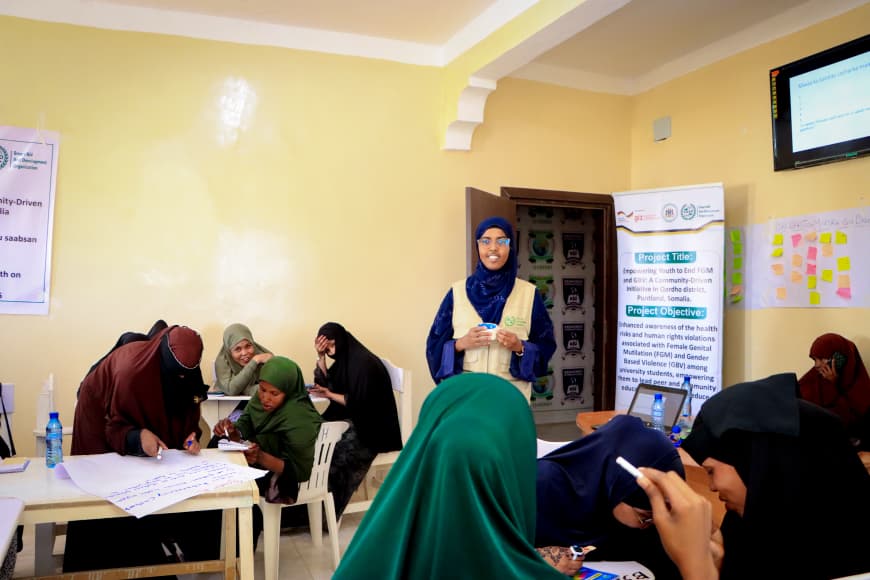
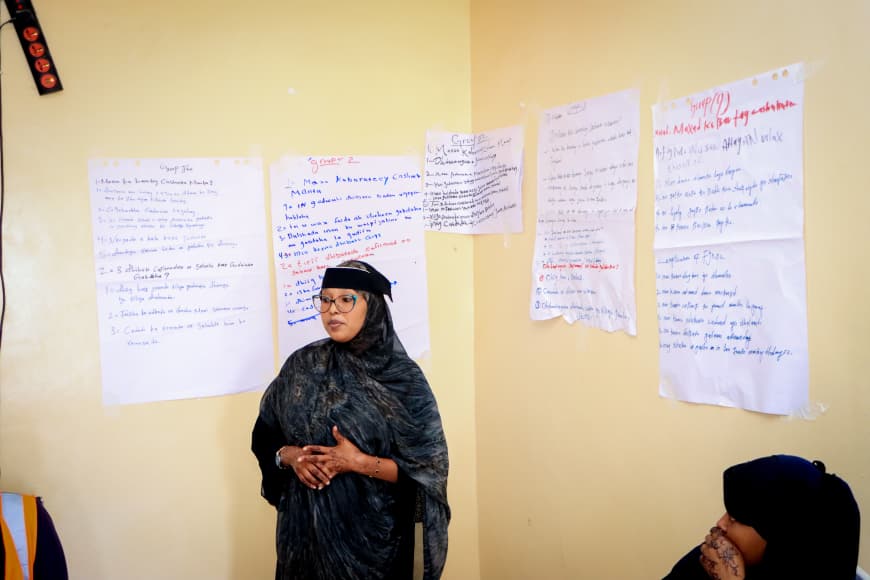
Finally, participants made individual pledges to oppose FGM in their communities and to act as advocates to prevent FGM among younger sisters, relatives, and future daughters. Referral contact numbers were distributed, and participants were encouraged to report any FGM incidents to the MOWDAFA coordinator and SAAD officers
Activity 5. Male Youth Dialogue (March 26, 2026):
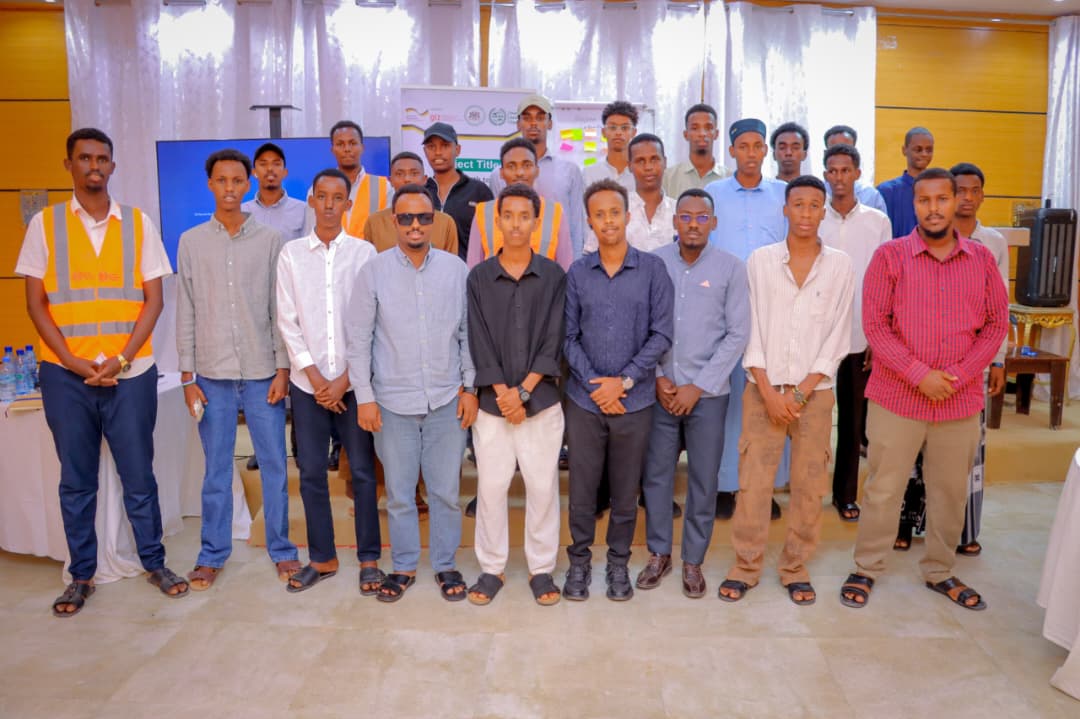
To build a foundational understanding of human rights and the harms of FGM among youth, SAAD organized a dedicated education session for 25 male youth from IDP and host communities. The activity aimed to transform male participants into informed allies and peer advocates against FGM. Key achievements included an improved understanding of harmful traditional practices—both globally and locally—using comparative examples to foster critical thinking. Participants were introduced to FGM as a harmful traditional practice, and its types, associated health consequences, and human rights violations were discussed. Religious justifications commonly cited in Somali communities were analyzed and shown to be invalid, reinforcing that FGM is a harmful custom, not a religious requirement. Participants were also informed about Puntland’s zero-tolerance policies and referral pathways. The session concluded with individual commitments from the male youth to actively oppose FGM and protect their younger sisters, relatives, and future daughters.
After the opening remarks of SAAD project officer and MOWDAFA coordinator in Karkar region, the facilitator introduced harmful traditional practices from other cultures to encourage critical reflection on the relationship between culture, identity, and human rights.
The facilitator presented two case studies:
- Foot Binding in China: Participants learned how this practice, banned in 1912, involved binding young girls’ feet to signify status and beauty, causing severe lifelong deformity and pain.
- Lip Plating in Ethiopia (Suri and Mursi tribes): The facilitator explained how girls have their lower lip pierced and stretched to accommodate a clay or wooden plate, with the size of the plate signifying social status and marriageability.
Participants were asked to reflect on these practices. A lively discussion ensued, with the young men collectively condemning them.
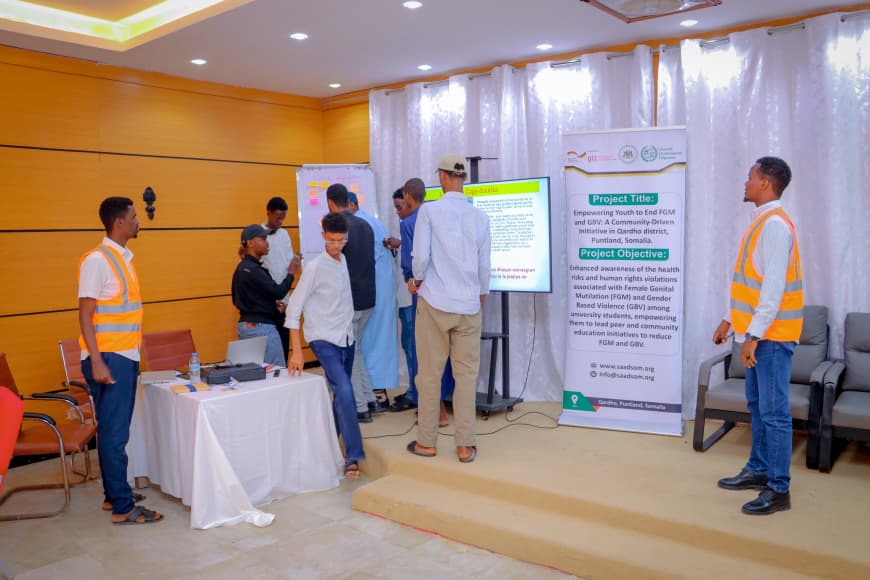
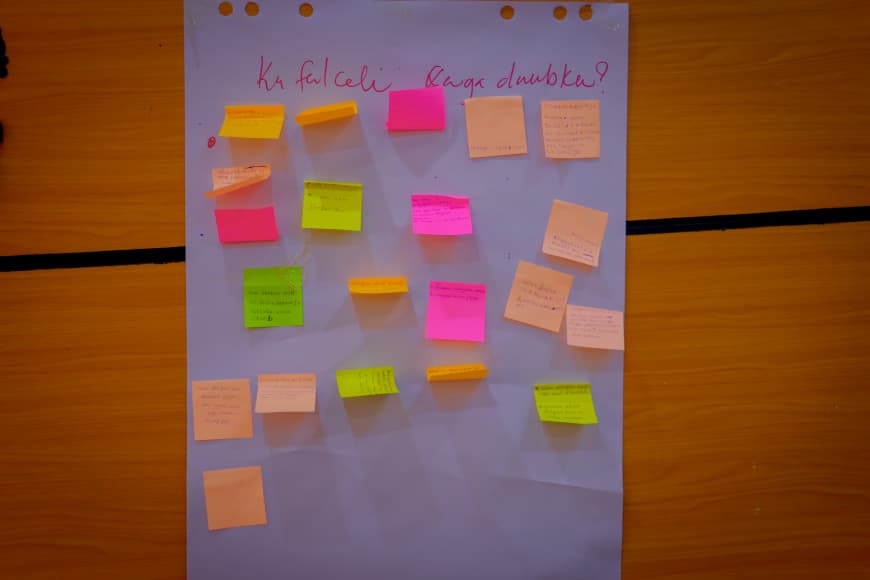
Participants unanimously agreed that such practices should not be maintained. They supported banning foot binding and recommended that lip plating also be prohibited.
One participant wrote: “This is not a good culture. I would say no if I had a say, because this obviously hurts the girls.”
Another participant stated: “This is not beauty. This is an alteration of God’s creation and should not be permissible anywhere.”
Another young man added: “Both lip plating and foot binding cause physical harm to the health of girls. Eradicating such traditions is the right thing to do.”
The facilitator then transitioned to discussing FGM, guiding participants to draw parallels between the global practices and the local context. The session covered the WHO definition of FGM, the different types with details on the procedures, and the immediate and long-term health consequences.
Participants engaged in a comparative exercise, analyzing how FGM—like foot binding and lip plating—is justified using culture, tradition, and perceptions of purity and marriageability. Key health risks discussed included:
- Severe bleeding and infection
- Chronic pain (including menstrual complications associated with the practice)
- Complications during childbirth, including increased risk of maternal and newborn mortality
- Psychological trauma
The facilitator emphasized that while foot binding and lip plating have been largely abandoned, FGM continues, despite being the most irreversible and damaging of the practices discussed.
A critical segment of the session addressed the prevalent misconception that FGM is an Islamic requirement. The facilitator presented evidence-based arguments:
- The Quran: No mention of FGM.
- Hadiths: The few hadiths used to justify the practice are considered weak and lack authenticity.
The facilitator concluded that the term “Sunna” in this context is misused; even if interpreted as “recommended” (not required), there is no authentic religious evidence to support the practice. FGM is a pre-Islamic cultural custom, not a religious duty.
Participants were informed of the Puntland government’s zero-tolerance policy, the anti-medicalization laws (prohibiting health workers from performing FGM), and the legal framework against the practice.
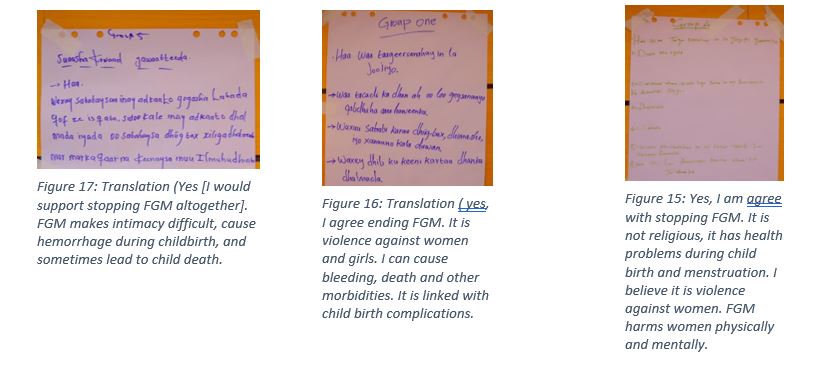
The session was concluded with an other discussion around this critical question: If FGM harms girls and does not benefit men, do you support stopping it altogether?
Participants were asked to reflect question individually and in groups, the result was outstanding. They all agreed that they would support ending FGM altogether. Here are their reflections:
The session concluded with the distribution of referral contact numbers for the MOWDAFA coordinator and SAAD officers, and participants were encouraged to report any FGM incidents or girls in need of medical or psychosocial support
2. Challenges
1. Persistent Belief in Sunna FGM Acceptability: Although most participants rejected Pharaonic FGM, a minority among parents and female youth still viewed Sunna type as acceptable or less harmful, often citing marriageability, concerns or traditional religious interpretations distinguishing it from Pharaonic circumcision. This remains a core barrier requiring continued engagement. Here, some comments from the parents showing the challenge:
“This practice is not new. Our earlier scholars permitted female cutting. Are we being taught a new religion now? You are telling us now it has no religious basis. I have never heard such a thing. And if we stop, who will marry our daughters?”
— Mother participant, Day 2
2. Emotional Distress & Breakthrough
One mother shared her personal FGM experience and got emotional when another parent downplayed the harm.
“I carried this pain for many years. You all know it is harmful—and I will not let any daughter of mine to go through what I have experienced.”
— Mother participant (parent gender separate session)
Facilitators provided immediate psychosocial support; the moment created a safe-space breakthrough, encouraging other mothers to share openly.
Positive result: Her testimony became a catalyst for deeper group reflection and strengthened collective commitment.
3. Lessons Learned and Success Stories
- The “Global to Local” methodology—comparing FGM to foot binding in China and lip plating in Ethiopia—proved highly effective in creating psychological safety for critical reflection. Participants were able to critique external harmful practices before applying the same analytical lens to FGM in their own community.
- The separate‑then‑joint session format allowed for honest, gender‑specific dialogue and then built shared household commitment.
- Youth activists from the community with right knowledge and interpersonal skills are credible and effective facilitators for community conversations. Community members showed respect, trust and openness throughout the sessions.
- Religious clarification is essential. Putting personal opinions aside and presenting authentic Islamic evidence—the absence of FGM in the Quran, the weakness and lack of clarity of supporting hadiths, and the overriding principle of “no harm” (La Darar wa La Dirar)—significantly shifted attitudes.
- Male youth are very open for stopping FGM. The question “If FGM harms girls and does not benefit men, do you support stopping it altogether?” led to unanimous agreement among male participants. More often, young men prefer uncut girl for marriage.
Success Story – Male Youth Session:
A young man shared a powerful testimony during the male youth session. He recounted how his uncle brought his nine‑year‑old daughter from the United States and had her cut in Laascaanood. The girl suffered severe bleeding and infection, requiring nearly a month of hospitalization. His story deeply moved the group and reinforced the real‑world consequences of FGM. He urged other young men to say no to the practice. His testimony contributed to a unanimous agreement among all participants to reject all types of FGM.
Success Story – Female Youth Session:
The survivor story shared by a trained activist during the female youth dialogue opened the door for seven other young women to share their experiences—many for the first time. The young women spoke openly about their pain and struggles, and this collective sharing helped strengthen their resolve to support the movement to end FGM.
4. Next Steps
Upcoming Activities (April–June 2026):
- Follow‑up Home Visits: Conduct supportive visits to participating families to reinforce commitments and address lingering questions, particularly about Sunna FGM. These visits will also help track whether daughters of participating parents remain uncut.
- Religious Leaders Workshop: Engage 10 religious leaders and elders to secure their agreement that FGM is not an Islamic requirement and to mobilize them as public advocates. The workshop will analyze religious texts, health evidence, and the leaders’ role in guiding moral change.
- Intergenerational Dialogue: Bring together 20 youth and 10 leaders to build consensus and co‑design a community advocacy activity.
- Resistance Response Training: Train 30 youth and 30 parents in the “Acknowledge, Reframe, Question” technique to confidently defend their anti‑FGM stance within social networks.
- Public Pledge Event: Organize a cumulative event for all participants (estimated 90+ people) to formalize their commitment by signing a public pledge for an FGM‑free Qardho, with healthcare professionals and Islamic scholars present to answer questions.
Expected Results: The continued implementation of CAP activities will deepen community ownership, expand the network of advocates, and move households from commitment to sustained action, contributing to measurable reductions in FGM prevalence in Qardho.
Measures Taken to Address the Challenges
1. Rigorous Religious Deconstruction in a Respectful Manner
Many participants held deep‑seated beliefs that FGM is a religious obligation, and challenging these beliefs risked causing offense or resistance. Facilitators began by acknowledging participants’ respect for their faith. The approach was framed as “understanding our religion more deeply” rather than “you are wrong.”
All religious arguments were grounded in authentic Islamic sources (Quran, Hadith, principles of Islamic jurisprudence), not personal opinion. Instead of simply stating facts, facilitators asked questions that encouraged participants to think critically, such as: “If FGM is an Islamic requirement, why is it not practiced in Saudi Arabia? Why do Christians in Ethiopia practice it?”
Recognizing that one session is not enough to undo years of teaching, SAAD planned a Religious Leaders Workshop to secure their support in FGM prevention and to publicly affirm that FGM has no authentic Islamic basis, directly addressing the doubts raised by parents and youth.
2. Managing Emotional Distress Among Mothers and Young Women
Sessions were designed with built‑in flexibility. When distress was observed, facilitators paused, acknowledged the difficulty, and offered private spaces for participants to collect themselves. Instead of requiring whole‑group sharing, participants were invited to share in small groups (4–5 people), reducing pressure while still creating space for expression. When a trained activist shared her survivor story, it was done with her full consent and after careful preparation, modeling courage without pressuring others. Facilitators recognized that moments of emotional vulnerability, when handled with care, could become powerful catalysts for group reflection and solidarity. A mother’s testimony during the separate session inspired others to open up and strengthened the collective resolve to protect daughters.
Submitted by:
Dr. Ahmed Isse
Project Officer
Smart Aid and Development Organization
Date: March 31, 2026